
Our Story
Four Red Plastic Bags
Some years ago, on an ordinary Saturday morning, I was at our weekly 7am prayer meeting. (Yes, 7am. On a Saturday. I am still not entirely sure how any of us were awake.) A friend had brought along a man in his fifties whom none of us knew. When it came time to share prayer requests, his was simple, almost too ordinary to notice. He asked us to pray that his house move would go smoothly.
Most of us move house at some point. We hear a request like that and nod along. But afterwards, over breakfast at a nearby coffeeshop, something made me offer to help. I had a small car back then, in the years before COE prices became what they are now. He agreed, grateful, and gave me an address. I later realised it belonged to another friend from church he had been staying with. That struck me as unusual, though I could not yet say why.
The day came. I drove over expecting the usual: boxes, perhaps a lorry, the ordinary clutter of a life being packed up. I asked him where his things were. He pointed to four large red plastic bags. That was all. All his possessions were contained in four plastic bags. I have never been able to forget that image.
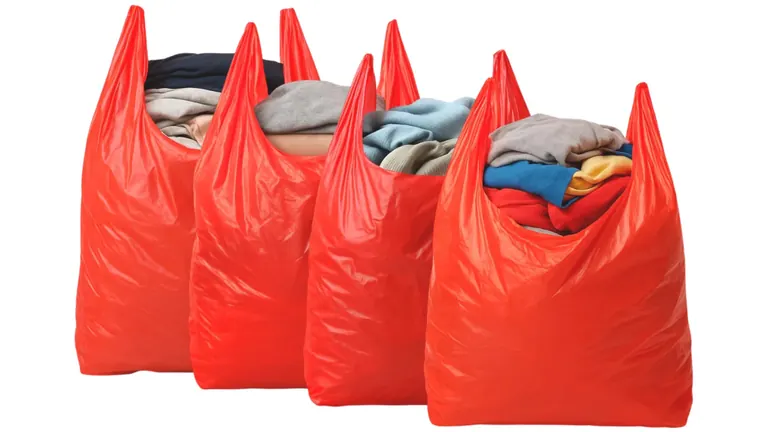
We loaded the bags into my car and drove to his new home, a one-room rental flat. Only then did I understand the weight behind his "simple" prayer. It was not only about who would help him move or who would cover the cost. He had successfully applied for a 1 room flat under the Joint Singles Scheme, which also comes with a rule that another assigned person must live there too, so he requested prayers that his new flatmate would be someone he could live alongside, and that things would somehow work out.
I learned, slowly, how he had arrived here. His spouse had been scammed of their life savings. The loss led to separation, then to depression, then to the loss of his job. He had once held a steady job and a stable life, not so different from most of us. One event undid all of it. As I stepped into that small flat, I remember how little space there was. People say a two-room rental flat is roughly the size of three carpark lots. A one-room flat is not far off, perhaps a little smaller still.
But the truth is, my story starts earlier than his.
It was only when I was much older that I understood my own family had been low-income. We got by largely because of the kindness of benefactors, people who chose to see us. That is a story for another day. But it means that when I stood there in that small flat, I was reminded of my own family, and of the people who had once quietly carried us.
So I wanted to help, and I did what most of us do. I gave to charities, I got my tax reliefs, then went back to my life. But I slowly realised I had no idea what happened after that. I could not tell you whether my gift ever reached a person, or what it became. Still, one wish stayed with me: that I could follow a single dollar all the way to a real person and a real need, and simply know that it landed.
That is where Bread Breakers began. I started to wonder: what if we built something completely radical. Not bigger, not slicker. Just radically honest, where you could see exactly where every single dollar went.

The Gate
To understand why this matters so much, it helps to go back to a story Jesus told.
In the Gospel of Luke, a poor man lay each day at a rich man's gate, longing for scraps. Both men eventually died. The rich man, who had everything, found himself in torment, while the poor man was carried by angels to Abraham's side. Notice one detail. The poor man is given a name. He is Lazarus. The rich man stays anonymous. The one the world stepped over is the one heaven remembers by name, while the one who lived in comfort is simply called "a rich man."
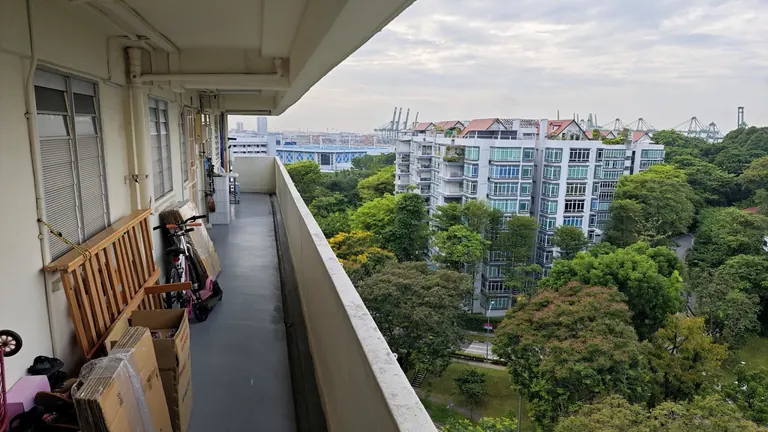
What was that rich man's name? We do not know. And the gate in that story is not a relic of the past. People sit outside our gates today, close enough to see, easy to ignore. Over here we have a picture of a typical HDB rental flat, then look across the road at the condominium behind its walls and gates, built to keep the outside world out. Look closely at the divide. What do you see? Do you see Lazarus?
Aligning with God's Heartbeat
From the first page of Scripture to the last, God has never stopped paying attention to the broken and the forgotten, and He asks us to look past our own gates and do the same. Many of us live in a Christian culture that has grown comfortable. We attend church, camps, cell groups, and discipleship groups, steadily gathering knowledge about the Bible. We give our percentages, support orphanages overseas, and go on mission trips, and it can feel as though our spiritual account is settled. But the gate is closer to home than we think. Everything we learn and do is meant to open our eyes, not shield them from the neighbour sitting right outside.
Activist and author Jim Wallis once said that if you took a pair of scissors and cut out every verse in the Bible about the poor and about injustice, the book would fall apart at the seams. The Poverty and Justice Bible highlights roughly two thousand of them. This is not about cherry-picking a few convenient passages. God's concern for the vulnerable appears throughout Scripture, from the Law and the Prophets to the Gospels and the Epistles. It is the steady, unchanging heartbeat of God's voice through history.
The warnings that come with it are just as striking. When the prophet Ezekiel names the sin of Sodom, he points not to the sins we usually assume, but to pride, plenty, and a careless indifference to the poor at their gate (Ezekiel 16:49). Proverbs puts it just as plainly: to mock the needy is to mock their Maker (Proverbs 17:5). And 1 John 3:17 says we cannot hold God's love in our hearts while closing them to a brother or sister in plain need. Again and again, Scripture ties how we treat the poor to the state of our hearts before God.
In Matthew 25, Jesus closely links the treatment of "the least of these" with the final judgment. The ones He turns away did not attack or oppress the poor. They simply looked past them. Christ treats that quiet neglect as if it were done to Him. This is not because kindness earns heaven. It is because a heart truly changed by grace cannot stay unmoved. Our care for the poor does not buy God's love. It reveals whether that love is already in us.
After Cain killed his brother, he answered God with a cold question: "Am I my brother's keeper?" It is the ancient version of the modern Singaporean shrug, "not my problem." The opposite of love is not only hatred. It is indifference. That same spirit is alive in us whenever we look away from a neighbour in need, or stay quiet so as not to be "kaypoh," quietly telling ourselves we are not responsible for one another.
I will be honest with you. Not everyone has found this worth doing. I have been told, kindly and sincerely by church leaders and influential people, that a christian's first responsibility is to give to the church, and that it might be better off to leave this kind of work to people of other faiths, who often do it better than we do. I understand where that comes from, and I say it without any bitterness. But I have also become convinced that this was never meant to be a competition over who gives the most, or who does it best. It is not instead of the church. It is not about being noticed, or being right, or showing that we are better off than anyone. It is simply about letting our small, ordinary lives fall into step with God's own heart for the needy, and looking a little more like Jesus as we go.
The Open Door
Singapore is undeniably prospering. Property values have generally trended upward over the long run. Household incomes keep rising, and even the staggering sums lost to scams each year hint at how much wealth is moving through our nation. (My friend with the four red plastic bags knows that last part all too well.) For most of us, as we save for our future, the real question is not how much we are saving, but what we are saving it for. Every day, social workers post verified requests for urgent, everyday needs: diapers, a replacement fridge, a simple electric kettle to boil water. These are families whose finances have already been carefully checked, who still fall through the cracks of existing grants and schemes, at their wits' end. Do you see the disconnect? More importantly, do you see the wide-open door to show God's love in a practical way?
That door has a name. Bread Breakers exists to make that one wish real, and to open it wide enough that you can step through it too. We never wanted to be the only ones helping; we wanted to make it simple enough that anyone could. Here is how it works. A social worker verifies a real, specific need and posts it. You can fund that item as a donor, or buy it and deliver it yourself and be reimbursed. Every dollar, every receipt, and every delivery is published openly for anyone to see. When our financial goals are met, we temporarily pause asking for more. Your gift goes to a specific person and a specific item, and you can follow it the whole way, receipt and all.
Will you walk through it with us?